
Trend of digital economy
Over the past decade, our lives have been tremendously transformed by advancement in digital technologies, hence business transactions and services have become increasingly reliant on digital tools like digital database, artificial intelligence (AI), social media and e-commerce platforms. The global economy has shifted from conventional way to digital-oriented operation, where Tapscott (2014) distinguished the old economy and new economy by their information flow, as the former one has physical flow with cash, checks, invoices and face-to-face meetings and the latter one has digitalized all forms of information with the use of computers and networks. Under the continual evolution of digital economy, United Nations Conference on Trade and Development (2019) identified digital data and platformization as the two main drivers behind its rapid growth, which are also factors behind the immense change in job roles.
Speaking of which, some business functions have been replaced by digital intelligence and job roles are reshaped by the latest trend of digital economy, such as the work of human resource personnel. Can you think of the major roles of HR personnel and how are they being transformed?
Digitalization of HR function
Use of digital tools
Moving onto the “digital era”, the role of HR function is predominantly changed by information technology, which improves and fastens HR administrative, operational and decision-making processes (Turulja and Bajgorić, 2016, as stated in Steijn and Van Den Muyzenberg, 2012). Across small-scale, medium-sized and multinational organizations, human resource personnel have started adopting tools of AI technology like Pymetrics Beta, PayScale and reviewsnap for recruitment and training, as well as using digital platforms like LinkedIn, Glassdoor and careerbuilder for talent acquisition. For instance, 26% and 22% of organizations use robotics and AI respectively, according to a survey by Deloitte (2019).

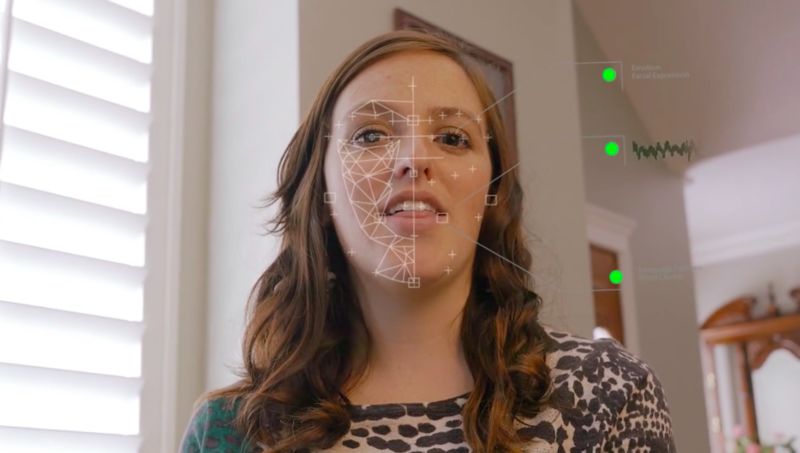
As Amladi (2017) evaluated, HR executives started using data analytics to identify critical trends and predict the rate of success of perspective hires, along with using algorithms to analyze and identify high-performing workers’ characteristics for future recruitment processes. Furthermore, manual works of recruitment and payroll are also being automated with the use of systems for digitalizing and searching job applications, employee portals and onboarding. In particular, multinational organizations like Unilever, Vodafone, Singapore Airlines and Intel, bought software from tech companies and developed AI-based systems to evaluate candidates’ video interviews by scanning their facial expressions, body language and word choice, replacing the conventional role of human recruiters (Booth, 2019).
Utilization of online platforms
Besides the digital tools, organizations have been utilizing various digital platforms for both internal and external uses, transforming the way of communication between HR personnel and other employees, as well as the processes of talent acquisition. Williams (2017) conducted a survey on the digital transformation brought by social media and found that 69.77% of respondents’ organizations in the US used social media as a recruitment tool, where a majority of them used Facebook and LinkedIn. Likewise, Almog (2018) asserted that 80% of engineers with Ph.D.s. are being looked up through Google and Facebook, showing that HR professional have been extensively using social platforms to search for ideal candidates instead of the old manual way of publishing advertisements or hiring headhunters. On top of facilitating recruitment processes, Hauptmann and Steger (2013) also stated other advantages of social media to HR management, “facilitating personnel recruitment, promoting learning processes on an individual, team, and organizational level, and enhancing community building and a trustful organizational culture through open communication”, by which social media has helped HR personnel to strengthen internal bonding by providing instant online communication and easier collaboration among workers.
Future of HR personnel
With the flourish of digital intelligence, various digital tools and platforms will become more accessible and affordable at the organizational level, hence it is likely that HR personnel will become more contingent on digital technology. Speaking of the future of human resources, Almadi (2017) noted the importance of “Millennials” – the younger tech-savvy generation, as they will make up about 75% of American workforce by 2025, which means that our future job market and economy largely depend on them, and it is ineluctable that organizations have to adopt different innovations and technologies, in order to recruit, retain and collaborate with them.
Furthermore, an increasing proportion of HR job roles like providing training, managing pay and benefits, and recruiting staff, are likely to be automated and replaced by emerging technologies, such as artificial intelligence, big data analytics, digital operating model and cognitive solutions. Nevertheless, it is still erratic whether HR personnel will be largely or completely dismissed from their positions in the future, however, as stated in the report of McKinsey Global Institute (2017), automation does not necessarily imply loss of jobs, but indicates the needs of acquiring new skills. In my opinion, it is highly possible that the role of HR personnel will be shifted from doing complex administrative work to overseeing automated processes and digital systems.
 Jacqueline's blog
3 replies on “How has digital economy transformed the role of human resource personnel?”
The author mentioned the impact of AI on HR. In the future, human beings who need to think for less than 5 seconds will be replaced by artificial intelligence, and the efficiency will increase greatly. As an important part of enterprise management, human resources are also experiencing profound changes brought about by digitalization. The post-85s and post-90s have become the main body of the labor force, they pursue the value and meaning of work, and pursue the supremacy of experience. They are the aborigines of the Internet age. Their interaction with enterprises and HR requires the same Internet consumer-level experience as online shopping and social chat.
The drastic changes brought about by digital at work are also undergoing earth-shaking changes. More and more evaluations of enterprises are based on their relationships with employees, customers and society, and their value to society as a whole. Enterprises have begun to transform into “social enterprises”.
LikeLike
Hi! As a Recruiter myself, I was interested by your point regarding the recruitment of the younger generation. We’re even beyond the “Millennials” stage now as we increasingly look to “Generation Z”, with 64% ranking career development as their top priority, and 32% seeing themselves within a supervisory role within the first five years of their career (https://recruiterbox.com/blog/3-things-companies-need-know-recruiting-generation-z). While recruiters need to be open to investigating new digital channels to attract talent, engaging and retaining candidates still relies heavily on people skills, including the ability to negotiate and persuade candidates into organisations for the long-term. For this reason, I don’t think the role of HR personnel will be reduced to “overseeing automated processes and digital systems” just yet, although as you rightly point out, they must be adept at using digital technology as a supporting tool. Skills must be developed, but the required qualities remain the same.
LikeLike
[…] https://jacquelinelaiphotography.photo.blog/2020/02/13/how-has-digital-economy-transformed-the-role-… […]
LikeLike